Lukewarm Coffee, Sharp Thumbs: A Pocket Guide to Garage Waiting
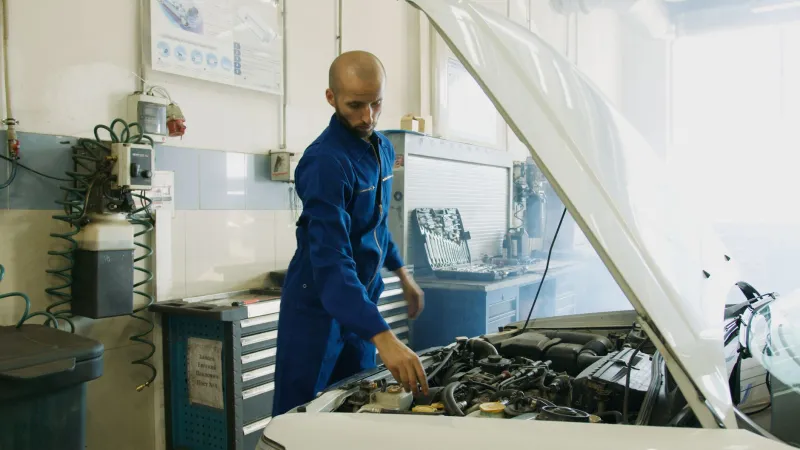
The MOT waiting room is its own peculiar British institution. It smells faintly of rubber, old upholstery and a kettle that has seen things. There is a TV showing daytime property programmes at a volume that makes you question the acoustics. Somewhere outside, your car is up on a ramp, and a mechanic is making a noise that could mean ‘all fine’ or ‘prepare yourself for the phrase brake fluid.’ You have no idea whether you are staying for twenty minutes or two hours. Pocket gaming was invented for exactly this sort of limbo.
But garage waiting is not the same as a sofa session or a commute. You cannot sink into a forty-minute campaign. You cannot blast sound. You cannot enter a live raid and leave your team in the lurch because Gary from the front desk has shouted your registration. This is a courtesy-pause situation. The game must respect the call-over.
The garage waiting room has its own laws
First rule: silence is golden. The TV is already doing enough. Keep your phone on mute, turn off vibrations if possible and avoid anything that demands audio cues. Second rule: assume the Wi-Fi is decorative. Some garages have a network called ‘MOT-Guest’ that works only if you stand by the fire exit and hold your phone at a very specific angle. Third rule: sessions must end instantly. The moment a mechanic appears with a clipboard, you need to be able to lock your screen, stand up and look like a responsible adult who has definitely not been sliding numbers around for forty minutes.
Also, battery discipline matters. You may have arrived at 9am with 80 percent; by 10.15am, after a few maps and a word puzzle, you will be glad of that cable in your bag. And finally: no rage games. You are about to receive a quote for something involving the words ‘corroded’ and ‘advisory.’ Keep the blood pressure low.
Seven pocket games for the ramp-side limbo
1. Knotwords
A word puzzle that feels like a crossword had a quiet weekend in the country. You are filling small grids with letters, and there is no timer breathing down your neck. Perfect for the garage because you can glance up every few seconds without losing your place. It is also silent by default, which means you will hear your name being called the first time, not the third.
2. Holedown
A brick-breaker with a lovely sense of weight. You fire balls into blocks, watch them bounce and try to be clever about angles. The rounds are short enough to feel snackable, and the tactile rhythm is weirdly soothing when the bloke at the desk has just said ‘we’ll need to get it on the diagnostic.’ No sound required. Works fine with one thumb and a paper cup of questionable coffee in the other hand.
3. Threes!
A sliding-number puzzle that is easy to start and quietly devious. You merge tiles, chase bigger numbers and try not to trap yourself in a corner. It is turn-based in spirit, even when it is not strictly turn-based, so looking away for ten seconds does not ruin anything. It also passes the waiting-room etiquette test: nobody has ever been embarrassed by a game of Threes!.
4. Mini Metro
You draw tube-style lines, place trains and try to stop your growing city from turning into a commuter meltdown. It is a lovely fit for a UK audience because it makes public transport chaos feel like a design problem rather than a personal insult. The key here is pausing early and often. Do not try to run a perfect network while a mechanic is walking towards you with a clipboard. Pause, pocket, smile.
5. A Little to the Left
A tidy-up puzzle game about putting things where they belong. Straightening pencils, stacking jars, aligning whatever has been left slightly askew. It is gentle, quiet and exactly the right energy for a room with mismatched chairs and a poster about tyre tread depth. Unlike your actual car, everything in this game can be put neatly back where it belongs.
6. Really Bad Chess
Chess, but with randomised pieces and a cheerful disregard for tradition. You get the tactical itch without the opening-theory homework. Matches are quick, turn-based and easy to abandon the moment someone calls your name. It is also a good distraction from mileage anxiety, which is the special garage feeling of wondering whether the advisory list will include ‘everything.’
7. Card Crawl
A small card-based dungeon crawler that plays in short bursts. You manage cards, fight monsters and try to survive with a hand that often feels one card short of sensible. Because it is turn-based, you can stop mid-thought, listen for your registration and return later without the game collapsing. Ideal for the bit where the TV has moved on to a programme about people buying a barn.
The called-over drill
Before you start any game, decide how you will pause. For most of these, it is one tap. Make that tap a habit: screen lock first, questions later. Keep your phone face-up on your knee rather than buried in a bag. Do not wear both headphones. Do not start anything with a live timer, a team countdown or a ‘your turn’ notification that will shame you later. And if the mechanic asks what you were doing, ‘just passing the time’ is a perfectly good answer. They do not need to know about your Mini Metro interchange strategy.
The garage kit
A charged phone, a short cable, a pocket-sized game or two and a willingness to accept that the coffee is not the point. The point is getting through the wait without refreshing the garage’s website every four minutes or inventing imaginary repair bills in your head. Pocket games are not there to make the MOT fun. They are there to make the limbo feel like a small, manageable session instead of a slow-motion quote reveal.
When your name is called, pocket the phone, pick up your keys and try not to look too surprised. The car might need new brake pads. Your thumbs, at least, will have had a decent morning.