Two Pence, One Thumb: The British Studios Putting the Pier Arcade in Your Pocket
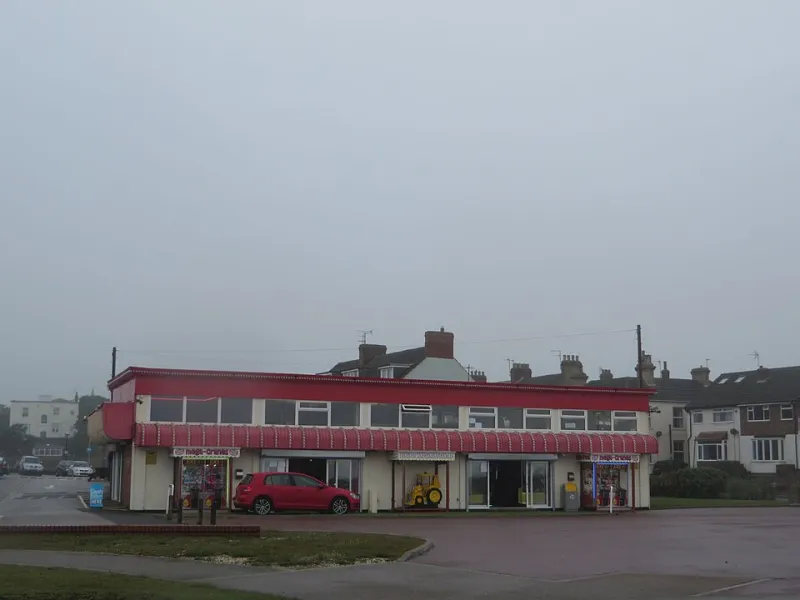
Photo: Graham Robson , CC BY-SA 2.0, via Wikimedia Commons
There's a specific sound a seaside arcade makes. Not the noise of the machines themselves, but the noise underneath them: the clatter of copper on glass, the mechanical groan of a pusher plate, the distant chime of someone winning 40p and reacting like they've won the lottery.
If you grew up anywhere near a British coast, that sound is baked into your memory. And in 2026, a growing number of small UK studios are trying to bottle it and squeeze it into your phone.
The Pier Never Really Closed
The British seaside arcade has been in managed decline for decades. Rows of cabinets have thinned out, the change machines have got fussier, and the big family holidays that once funded them have largely moved abroad — or been replaced by a long weekend in a caravan.
But the appetite never vanished. Ask anyone about a 2p pusher and watch their face change. There's a specific, slightly embarrassed affection there: the coins balanced on the edge, the machine that nudges them forward by a millimetre, the absolute certainty that the next coin is the one.
That feeling is the product. And it turns out it translates remarkably well to a touchscreen.
From Cabinet to Thumbnail
The best of the new wave aren't ports — they're translations. Developers working in this space consistently describe the same job: figure out what the machine actually feels like, then rebuild that feeling with different rules.
A real penny pusher runs on unpredictable physics. A phone game runs on a fixed number of moves, a currency, or a session timer. Squash the two together badly and you get a slot machine with extra steps. Get it right and you get something closer to a puzzle game with a nostalgia skin — one where the satisfaction comes from judging an angle, not from chasing a loss.
Sound design carries more of the weight than you'd expect. That clatter, that low mechanical hum, the plastic chime when something drops into the tray — several mobile takes on the format lean heavily on audio because it's the fastest route back to a wet bank holiday afternoon in Cleethorpes.
And then there's the session length. A real pier arcade is a five-minute experience repeated twenty times. That's a natural fit for pocket play, and it's why these games feel less like a genre and more like a habit.
Brighton, Blackpool and the Holiday Headspace
What makes this wave distinctly British isn't the mechanics — it's the mood. Claw machines and coin pushers are global, but the references here are specific: the amusement arcade at the end of the pier, the flashing sign, the slightly sticky carpet, the machine that's definitely rigged and the one that definitely isn't.
Developers based along the south coast talk about capturing what they call the 'holiday headspace' — that loose, unstructured state of mind where twenty pence means nothing and two hours means nothing either. Recreating that on a phone, in a world where every session is competing with a notification, is a genuine design challenge.
It also lands differently with a UK audience. Seaside towns are shorthand here — Blackpool, Brighton, Southend, Llandudno, Barry Island — in a way that a generic 'amusement park' setting never could be. Nostalgia is a shortcut to atmosphere, and British developers have a very specific nostalgia to work with.
The Claw Machine Problem
Here's the awkward bit. Arcade games and gambling have always shared a wall, and the line between 'a bit of fun' and 'predatory design' is one that mobile developers have to walk carefully.
The industry has spent the last few years getting noticeably stricter about simulated gambling, particularly when it's dressed up for younger players. Loot boxes have been the flashpoint, but near-miss mechanics — the thing a claw machine is built on — are under similar scrutiny. A claw that swings just past the prize isn't an accident. It's the entire business model.
The studios doing this well tend to make the randomness visible. They show you the odds, cap the spending, and let you walk away with something even when the big prize doesn't drop. That's a world away from the real thing, where the house always wins and the carpet is always sticky — and it's the only way the trend survives contact with regulation.
Heritage, Not Museum Piece
There's a preservation argument buried in all this. The British arcade is an under-documented bit of working-class leisure history — the cabinets were cheap, the operators were small, and almost nobody thought to photograph any of it before it was gone.
Mobile games aren't a substitute for that. But they do keep the vocabulary alive. A generation that has never fed a 2p coin into a pusher still recognises the shape of the thing, and every decent adaptation adds a small amount of pressure to keep the real ones running.
Some seaside operators have quietly leaned into it. Arcades that survived the last decade are now part museum, part attraction, part backdrop for a photo — and the games in your pocket are part of the same cultural ecosystem, however far from the pier you happen to be.
What's Next for the Great British Arcade
The trend isn't going to stop at pennies. We're already seeing interest in the weird corners of the format: the strength tester, the fortune teller cabinet, the grabber with a cuddly toy that's been there since 1998. All of them are puzzles in disguise, and all of them are five-minute experiences with a soundtrack that lives rent-free in your head.
Whether any of it lasts beyond the current wave of nostalgia is another question. But for now, the pocket version of the pier is thriving — one thumb, two pence, and absolutely no intention of going home before teatime.