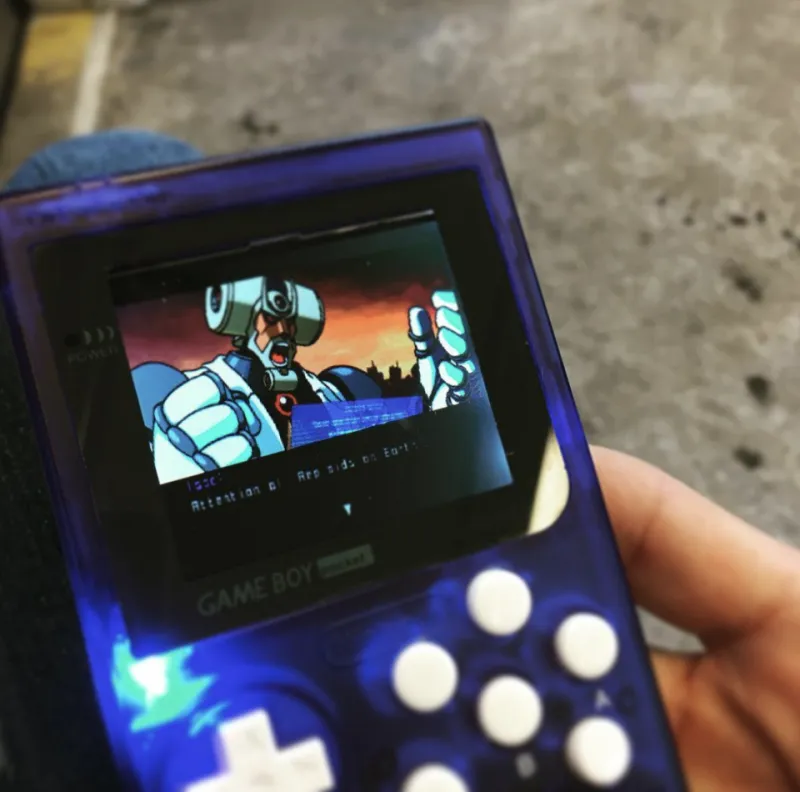
Small Screen, Big City: Why Pocket Time Is Winning in the UK

Photo: Sahid Martin Robles Bello, CC BY-SA 3.0, via Wikimedia Commons
There is a moment on every British lunch break when the phone comes out and the day briefly belongs to you. Maybe you are in a sandwich shop queue, maybe you are on a bench outside the office, maybe you are sitting in a car outside a school waiting for the gates to open. You have ten minutes. You are not going to start a 100-hour open-world epic. You are going to play something small, sharp and complete. Welcome to pocket time.
In 2026, the way many UK players talk about games is shifting. The big-screen blockbuster is still there, still impressive, still capable of eating a Sunday. But the default question has changed. It is no longer just what can I play tonight. It is what can I play now, in the gap between real-life things. That gap is where handhelds, phones and retro portables are quietly winning.
The ten-minute hemisphere
Pocket time is not a device. It is a mental zone. It is the quarter-hour before the kettle boils, the bus ride that is shorter than a podcast episode, the wait for a friend who said they were five minutes away and meant fifteen. It is the school run, the lunch break, the train journey where the signal drops somewhere outside Reading.
British players have always had little pockets of time. What feels different in 2026 is how deliberately games are being chosen for them. A 100-hour game is not just entertainment; it is a commitment with a map. A great pocket game respects the fragment. It says: give me ten minutes and I will give you a complete thought. That is a powerful offer when your day is already full of half-finished things.
Why the big epic is losing the pocket vote
This is not a rebellion against big games. It is a rebalancing. The open-world epic still has its place, usually on a sofa, usually on a weekend, usually with a drink nearby and no one asking where their PE kit is. But the way many people play has changed. Time is chopped up. Attention is split. The commute is not a quiet reading hour; it is a standing-room negotiation.
Handhelds and phones fit that reality. They are already there. They do not demand the television. They do not need a patch to download before you can start. They are happy with one thumb and half an eye. Add the rise of retro portables and handheld PCs, and you have a culture where the small screen is no longer the lesser screen. It is the screen that fits the day.
There is also a value question. A 100-hour game can be brilliant value, but only if you actually play it. A five-pound pocket game that you finish on three bus rides can feel like better value than a sprawling epic you admire from a distance. Players are getting sharper about what they want from their time. Big fun in small sessions is not a compromise; it is a preference.
What makes a great micro-game
A great micro-game is not a small version of a big game. It is a complete thought. It has a clear loop you can understand in under a minute, but enough texture to keep you curious. It respects the pause. It does not punish you for looking up when your stop is called. It works offline, or near enough, because the UK still has signal blackspots with a sense of theatre.
Most importantly, it has a beginning, a middle and an end that fit into a pocket. That might be a single run, a hand of cards, a puzzle, a level, a score chase. The best ones leave you feeling like you did something, not like you merely killed time. There is a difference between filling a gap and turning a gap into a bonus level.
How UK developers are responding
British studios have always been good at tight design. From bedroom coders to micro-teams, there is a long tradition of games that do a lot with a little. In 2026, that instinct is being aimed squarely at pocket time. Developers are thinking about the seven-minute brew, the twelve-minute train hop, the lunch break that is really nine minutes by the time you have queued.
The result is a wave of games that feel made for a phone on a bus rather than a billboard on a motorway. Less cinematic sprawl, more systemic charm. Fewer loading screens, more quick restarts. It is not about making games smaller for the sake of it. It is about making them fit the rhythm of how people actually live. UK humour helps too. A game that can raise a smile in ten minutes is doing something right.
Pocket time is not anti-big game
It would be easy to turn this into a war between the tiny and the epic. That would be missing the point. Most players are not choosing one forever. They are choosing the right game for the right moment. The big game owns Sunday afternoon. The pocket game owns Tuesday lunchtime. The handheld does not replace the television; it fills the gaps around it.
That is the healthy version of 2026 gaming culture: a broader menu. Some days you want a hundred-hour world. Some days you want a ten-minute run that makes you miss your stop. The pocket player is not impatient. They are just honest about the shape of their day.
The 2026 pocket player
The 2026 pocket player is selective. They ask whether a game can be played in ten minutes and still feel like something. They care about battery life, offline modes and whether the pause button actually works. They are less impressed by scale and more impressed by fit. They want big gaming fun in small sessions, and they are no longer embarrassed to say so.
That is why the ten-minute hemisphere matters. It is not a smaller world. It is a world that fits in your hand, on your commute, in your lunch break, in the gap between the kettle clicking and the tea being ready. The big screen can wait. Pocket time is now.